
Ismat Dajani is a third-year student at McGeorge School of Law. 

I joined the Elder and Health Law Clinic at McGeorge School of Law to get a better idea as to what kind of law I’d like to do after law school. I heard from others what their experience was like, and my experience has been similar. The Elder and Health Law Clinic lets you delve into a variety of different issues, whether it’s probate, estate planning, contracts, elder abuse, or other issues. You get thrown into the deep end, knowing nothing, and you slowly build a foundation of knowledge to work with. Over the summer, I got to learn how to write up elder abuse restraining orders, research some novel legal issues, and familiarize myself with the general administrative practices that a lawyer partakes in.

I was given six cases during the summer, a lot of which no work had been done on previously. I was meeting the client, getting to know them, and learning what issues they needed to have solved. The Clinic pushes you to be a lawyer. You do have supervisors who supervise your work, but they don’t just hand you the answers. Senior Staff Attorney Lacey Mickleburgh and Professor Melissa Brown will help you when you need it and are excellent teachers, but they don’t hold your hand which is what makes the Clinic such a great learning environment. You’re building the case, and you’re the one acting as the lawyer. The supervisors are just there as the bumpers in a bowling alley, so that you don’t fall into the gutter.

So, not only did I learn about different areas of the law while working at the Clinic, but I’ve gotten a good taste as to what it means to be a lawyer and the kind of work I’d be doing in any law firm or law office. Further, the work is fulfilling. It’s great work experience that has taught me a lot, and it makes me feel good while doing it. The people that come into our office are always grateful for our assistance, even when it hurts us to tell them that we can’t help them. That is sadly what happens a lot. Their issue is just too big for the Clinic to handle or it’s beyond our scope of representation. Yet, the people are still grateful because you took the time out of your day to listen when no one else would. There is no greater feeling than when you help a client who had no one else to turn to. It does make the work a bit stressful, but that’s why it’s meaningful: You are working with real people, with real legal issues, and you might be the only one who can help them.

I recommend anyone who has the opportunity — to give the Elder and Health Law Clinic a try — especially if you want that real-world lawyering experience while doing some fulfilling work that makes you feel good.

By Ismat Dajani, a third-year student at McGeorge School of Law. 

Adriana Aguena, LLM ‘12, decided to pursue an LLM degree because she saw it an opportunity to further her career as well as to live in the United States and learn about the culture and the opportunities in the legal field. Aguena is originally from São Paulo, Brazil.

Aguena’s favorite course was Legal English, which is a unique class designed for international legal professionals and students. The Legal English class was instrumental to her success as a student and during her career because it prepared her for activities inside and outside the classroom. Aguena says that the professors at McGeorge are wonderful, and they will challenge you.

Aguena is the Assistant Director of Graduate and International Programs at McGeorge. She has a passion for sharing the experience for other students and opening the doors for other legal professionals for this transformative experience at McGeorge.


Learn more about McGeorge School of Law.

Apply today.

Learn more about the LLM and JSD Program.

Learn more about the Global Center for Business & Development.

Clémence Kucera, LLM ’05, is originally from France. She decided to pursue an LLM degree at McGeorge School of Law because the program was recommended to her by a personal connection. As soon as she visited the campus, she knew right away that McGeorge was a good fit for her.

Kucera recommends the LLM program at McGeorge to prospective students because it has a lot to offer and students are always able to find their place here because of the supportive law school environment. She explains that McGeorge professors take the time to sit down and meet with students to help answer question to succeed in class.

Kucera has worked at McGeorge for nearly 20 years in a variety of capacities. She currently serves as the Assistant Dean of Graduate, Online, and International Programs for McGeorge School of Law.


Learn more about McGeorge School of Law.

Apply today.

Learn more about the LLM and JSD Program.

Learn more about the Global Center for Business & Development.

Faith Olofintuyi graduated from McGeorge School of Law with an LLM degree in U.S. Law and Policy in 2017. Olofintuyi chose to get an LLM degree to expand his network in the legal community. Olofintuyi is originally from Nigeria, and moved to the U.S. to start his LLM studies.

During his legal studies, Olofintuyi interned at Chevron Corporation in the Bay Area. He was able to land this internship because of the network he built during his time at McGeorge.

After graduation, Olofintuyi chose to get involved with the school’s Alumni Board so he could serve as a voice for international students.

A few factors Olofintuyi found helpful in his decision to attend McGeorge were because of the feel, energy, and weather in Sacramento. Additionally, he said that McGeorge is the place to go if you want more than an education out of your time.


Learn more about McGeorge School of Law.

Apply today.

Learn more about the LLM Program.

Learn more about the U.S. Law & Policy Program.

Lydia Maldonado is a second-year student at McGeorge School of Law. 
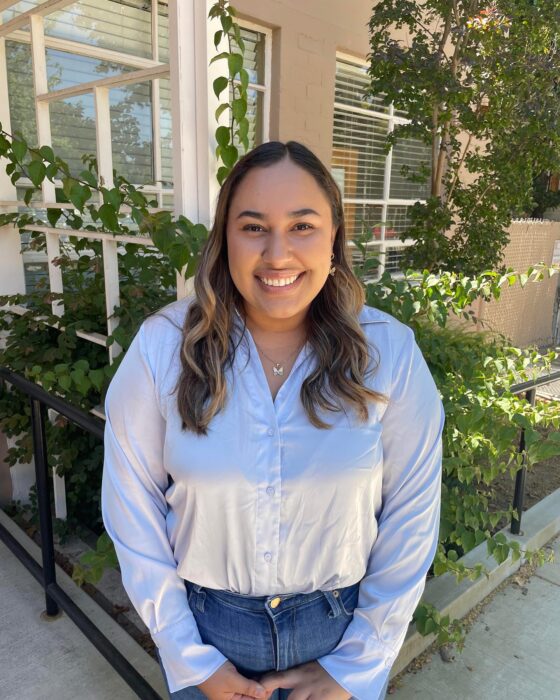
The Immigration Law Clinic at McGeorge School of Law was something I got involved with because I knew I wanted to help people. I realized that I have a lot of privilege and that I should speak out for those who don’t have as much privilege as I do. I was attracted to the Immigration Law Clinic because I became aware of Sacramento’s diverse population shortly after moving here. I knew that at the Immigration Law Clinic, I could make a huge impact on the community I now call home. When the Director of the Immigration Law Clinic, Blake Nordahl, spoke at orientation, I knew I wanted to be part of the Immigration Law Clinic. Everything seemed to click for me, and I got his information to apply for the position as soon as possible. I was eager to learn more about immigration law and how I could make a difference.

While I did not have any personal experience with the immigration process, I still wanted to learn about this area of the law. My family on my dad’s side is from Puerto Rico, and my grandfather had less than a first-grade education. When he came to the United States (mainland), he wanted his family — including his future grandchildren — to have a better life. I resonate with that part of my family’s history, which ultimately drew me to the Immigration Law Clinic.

Working in the Clinic over the summer was among the most rewarding things of my life. I met clients who have been through unimaginable trauma and yet, they still were grateful for my work and were invested in their cases. They shared their stories with me and trusted me with their case, which was a scary, but transformative experience. I learned so much at the Clinic and cannot wait to continue in the fall semester, so I can see some of my cases through to the end.

One of the many things I learned at the Clinic was interviewing clients, particularly interviewing children. I worked on a few cases over the summer dealing with minors, and it is an entirely different experience to interview a minor than it is to interview an adult. I also learned about writing and submitting motions to the court.

A Clinic memory that stands out to me is working on a motion for weeks, then having it granted by the court. I went to the hearing, and the judge granted what my client needed to move forward in her immigration case. It was absolutely amazing, and I will never forget the experience. I could not have imagined a better place for me to spend my first summer working. The Immigration Law Clinic is something I will cherish for my entire career.

By Lydia Maldonado, a second-year student at McGeorge School of Law. 

Maritza Ortiz-Urrutia is a second-year law student at McGeorge School of Law. 

I became involved in McGeorge School of Law’s Immigration Law Clinic during the summer of 2023 after my first year of law school. I wanted to work at the Clinic to thoroughly explore my options and try out a branch of law I was interested in and had always wanted to work in. While I came into the Clinic with no prior formal experience, my passion for social justice and advocacy fueled me during my time there to strive for the best for our clients.

When I came into the Clinic, I was assigned cases on naturalization, special immigrant juvenile status (SIJS), asylum, re-parole, and varying motions concerning removal orders. I truly had no idea how immersive and hands-on the Clinic was, and it took me by surprise to have such responsibility so quickly. I learned early on to trust myself and use the knowledge I acquired during my first year of law school to apply it to real life cases. I had the opportunity to really connect with our clients by meeting with them in person, calling them every week to update them on their case, and form my own legal conclusions by writing memorandums with the help of our supervising attorneys.

Community Legal Services runs as its own pro-bono law firm within McGeorge School of Law, making legal help more accessible and available to the community. It has been especially gratifying to assist the neighborhood of Oak Park, which is a historically underserved and low-income community in need of legal resources. The legal world can be difficult to navigate as it is, and that is especially true in the field of immigration law because it has so many complex forms and processes. I personally come from South Sacramento — not too far from Oak Park — so it has been rewarding to get to help the community I come from as well.

In addition to assisting community members that are in need, I have also been able to showcase my first language of Spanish to better assist our clients in the Clinic. I have predominantly worked on cases where the client only speaks Spanish. This summer has been so special because I not only gained professional skills in client interviewing, developing a case plan for my clients, and preparing declarations, but I also learned to do it in Spanish to serve our Latino community in Oak Park.

As a first-generation daughter to immigrant parents, I have experienced first-hand how challenging it can be navigating the immigration system without legal representation. The Immigration Law Clinic at McGeorge School of Law has without a doubt provided me with the practical skills to help our community through the challenging obstacles of immigration law. Being at the Clinic during the summer of 2023 was the highlight of my first year of law school, and I cannot recommend it enough. It has transformed me into a working professional and given me the confidence to continue to advocate for other underserved communities.

By Maritza Ortiz-Urrutia, a second-year law student at McGeorge School of Law. 

Fernando Almaraz, ’23, está en el Programa de Honores Acelerados (AHP) en la Escuela de Leyes McGeorge. Almaraz escogió perseguir sus estudios legales en McGeorge por varias razones: El programa AHP provee una manera más rapida de terminar la escuela de leyes que la ruta tradicional de tres años, la ubicación de McGeorge en la capital del estado, la facultad experta, y el sentido de la comunidad que construye McGeorge.

Después de graduarse, Almaraz quiere trabajar dentro de la industria agrícola porque él es del valle central y tiene experiencia trabajando en un viñedo. El verano pasado, Almaraz pudo hacer una observación en la Federación de Oficinas Agrícolas de California y trabaja en una variedad de desafíos agrícolas impactando California.


Obtenga más información sobre la Escuela de Leyes McGeorge.

Aplicar.

Programa Acelerado de Honores.

Yanin Ortega is a rising second-year student at McGeorge School of Law.  

As part of McGeorge School of Law’s Salzburg Graduate Study Abroad Program, I was lucky enough to participate in the European Law in Practice internship. I wanted to study abroad because of the enriching cultural experience that comes with living in a foreign country as well as learning about foreign legal and education systems. I think it is important to learn from an international perspective because it allows for a deeper understanding of certain customs and traditions. Gaining this experience is so helpful to life back home both personally and professionally because it allows me to be more compassionate and understanding, which will allow me to better contribute to the legal community.  

Before spending three weeks taking law classes in Salzburg, I worked at the Università di Parma in the Emilia-Romagna region of Italy as a research assistant with Professor of Law Stefano Maffei. During the internship, I researched international legal cases that addressed instances where solitary confinement was challenged due to breaches of human rights. I learned how to use various databases more efficiently to gather the international resources that I needed. I also researched recent cases of extradition in preparation for the International Extradition and the European Arrest Warrant Advanced Seminar that Professor Maffei leads in Sarnico, Italy. The Extradition Seminar allowed me to learn from defense attorneys and prosecutors who work on extradition cases as well as what is required for extradition.  

I also participated as a storyteller in the yearly English for Law & International Transactions (EFLIT) educational retreat in Sarnico that is designed to teach Italian law professionals the basics of the American legal system as well as legal English. As a storyteller, I prepared an explanation of a recent legal topic from the U.S. and presented it to small groups of Italian legal professionals to facilitate a discussion where the group would learn how the U.S. handled a certain issue, and I would learn how Italy may handle the legal issue. My topic covered cancel culture in the U.S., which was something the Italian professionals saw from a different perspective. These small groups allowed for great discussion and comparison of the legal systems and a greater understanding of cultural customs. I was able to improve my public speaking skills and gain the confidence to teach a group and facilitate an interactive discussion.  

This experience really helped me improve my research and writing skills, so that I was able to ensure my research is thorough and focused on the topic of interest. I also learned a lot about myself by having the courage to be away from home for so long in a foreign country where I don’t speak the native language. I gained the ability to be patient with people, adapt, and creatively find solutions to things as simple as getting groceries or ordering coffee in another language. I am grateful for the incredible experience that McGeorge School of Law has offered me to improve my skills, and I am ready to continue into my second year more focused and excited for what the future holds. 

By Yanin Ortega, a rising second-year student at McGeorge School of Law.  

Crystal Rodriguez is a third-year law student at McGeorge School of Law. 

Everyone experiences that one life-changing moment that shapes their identity and molds their career choices, mine was when I was fifteen.  

My father had been working as an executive chef at a country club, and my mom was a stay-at-home mom. They had saved up enough money to buy a house, and for a moment, life was good. But unfortunately, the effects of the 2008 financial crisis would soon find its way to us, and my father was laid off from his job. That one calm moment was gone. The house that my parents had saved up for became a burden, with the payments exceeding what my father could pay, having only an unemployment check to sustain a family of five.  

Through bankruptcy however, we were able to stay afloat and keep our house. It was at this moment that I decided I wanted to help people who may not have the knowledge or resources to handle situations like this on their own. I wanted to become knowledgeable in this area in order to become an advocate for those in similar situations to my family.  

Fast-forward some years later, and I am confronted with the question of where I want to go to law school. Since I began my journey with an interest in bankruptcy, I wanted to look for a place where I could explore this interest further. Out of all the schools I applied to, McGeorge School of Law was the only one that had a legal clinic dedicated to bankruptcy. It felt like a sign, and I followed it to McGeorge. The moment I was able to, I applied to participate in the Bankruptcy Clinic and was accepted into the program at the beginning of my 2L year. I have been active in the Clinic ever since.  

The first thing you learn in both the Bankruptcy Clinic and the class is that the purpose of a bankruptcy is to give debtors a “fresh start.” This is achieved by the “discharge” at the end of the bankruptcy that in theory leaves the person debt-free to start over. At the Clinic, we focus on Chapter 7 Bankruptcies, which are considered “full liquidation” bankruptcies where assets are sold to repay debt. Students at the Clinic conduct client calls and interviews, as well as draft bankruptcy petitions for filing.  

I have loved every interaction that I’ve had with clients at the Clinic, and the relief I see on their faces once we file the petition is priceless. Just like my family, many of our clients are seeking aid after dealing with financial hardship, which oftentimes is out of their control. My experience with the Clinic has been truly remarkable and has continued my passion to work in the bankruptcy field.  

Bankruptcy is one of those things that people view very negatively, whether it be that it will affect your credit score or that people will treat you differently when you list it on an application. While there are inevitable consequences of filing for bankruptcy, I don’t view it as negative. I view it for its purpose, to give debtors a “fresh start,” a lifejacket thrown to them when they are drowning. It is with this mentality that I continue to appreciate the good that this field can do for people. 

I can’t wait to continue learning and growing more in this area of the law in both my externship this fall with the Bankruptcy Court and my role as a team leader for the Bankruptcy Clinic in the spring. My hope is to continue in this sector post-grad in some capacity because of the flame it ignited in me so many years ago. 

By Crystal Rodriguez, a third-year law student at McGeorge School of Law. 

Fernando Almaraz, ’23, is in the Accelerated Honors Program (AHP) at McGeorge School of Law. Almaraz chose to pursue his legal studies at McGeorge for three reasons:

  1. The AHP program provided Almaraz with a way to finish law school faster than the traditional three-year route.
  2. McGeorge’s location in the state’s capital allows him the opportunity to work for a variety of different organizations that not only have a state impact, but a national impact too.
  3. The professors and sense of community that McGeorge builds. Because McGeorge has smaller class sizes than other institutions, Almaraz has closer and stronger relationships with his professors and classmates.

After graduation, Almaraz would like to work within the agricultural industry because he is from the Central Valley and has a background working at a winery. Last summer, Almaraz was able to extern at the California Farm Bureau Federation and work on a variety of agricultural issues impacting California.


Learn more about McGeorge School of Law.

Apply today.

Learn more about the Accelerated Honors Program.