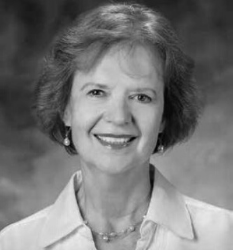
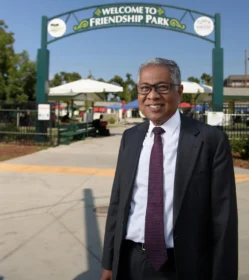
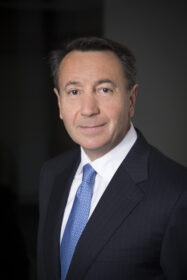
Carolina Rondón Chacón, LLM ’17

Carolina Rondón Chacón, ’17, is a McGeorge School of Law LLM alumna, who practices immigration law in Las Vegas, Nevada.

1. Carolina, you are originally from Colombia. How did you discover and decide to attend McGeorge for your LLM degree?

After graduating from law school in Colombia, I realized that if I wanted to pursue my international legal career I needed to improve my English skills. I came to Sacramento, California to learn English during an ESL class for six months. While completing this program, I found out about McGeorge School of Law and the excellent international program that the school offered. I decided to visit the campus, and it was then that I knew I wanted to pursue my studies there. From the moment I stepped into the green quad and met the welcoming and helpful staff who presented to me the tailored program designed to meet each student’s needs, I knew I would call McGeorge home for the next year. Now, I can safely say I was not wrong because McGeorge still feels at home even after 7 years have passed.

2. What did you find the most challenging about coming to Sacramento and to McGeorge?

In my particular case, I would say I was most challenged by the language barrier and adapting to the Socratic method used for the classes. As I mentioned earlier, English was not my first language, and while I had already improved a lot when I was admitted to McGeorge, I do now realize that I had to put extra effort into reading before class, writing papers, and preparing for classes because I knew I could be called on at any moment during class. I am now grateful that the international program at McGeorge met my needs by offering an optional Legal English class for international students. I am confident to attribute the improvement of my English skills to both the LLM program and the tools that McGeorge offered us. Through my personal experience, I hope to encourage any prospective student hesitating in pursuing an LLM as the language barrier challenge can be overcome with the right tools and support.

3. You came from a civil law legal system. What has it been like to practice law in a common law jurisdiction?

It was challenging, to say the least. After being trained for many years in Colombia to excel in practicing in the civil law legal system, it takes a shift in mind to adapt to the common law jurisdiction. In my experience, the common law jurisdiction is broader which allows us to be more creative in arguments and requires us to analyze the law, including case law, from different perspectives to be able to apply it to the particular set of facts. I have come to realize that having the opportunity to understand and be trained to argue in the common law system provides particular analyzing and argumentation skills that are helpful to the practice even in the civil law system.

4. What did you enjoy the most about your LLM experience?

Without hesitation, I will say that what I most enjoyed was the personal relationships that I created during that year. Since the program allows the LLM students to take classes with JD students, it provides a great opportunity to meet both international students from all over the world and local students which helps us to have a more immersive cultural and legal exchange experience. I cherish the memories I made with my classmates in the quad, the pool, and even the intense study sessions. I was mostly surprised by having Professors who were always willing to help and even invited the LLM students to celebrate Thanksgiving at their house. I thank the school for granting me the Outstanding Student Service Award because this will be a lasting reminder of a significant part of my experience at McGeorge.

5. What other tools or experiences would you highlight from the program?

I particularly remember that through McGeorge I was able to participate in the international job affair in New York in January 2017. I was selected to interview by two of the biggest law firms in Colombia and offered a job position by one of them. It was my first time in New York, so I was particularly excited to participate in this affair. I am especially grateful to McGeorge’s Career Services Office for their help in drafting my resume.

The program also facilitates the participation of LLM students in most events organized by the school. For example, I volunteered in a public immigration affair with the school’s Immigration Law Clinic which allowed me to learn more about the immigration system and to help real clinic clients in their immigration proceedings.

6. Based on your experience in the LLM program, would you recommend McGeorge graduate programs to potential students? 

Yes. I recommend McGeorge for its excellent academic program, its strategic location in California, its warm and kind staff, and the many career tools that the program offers to international students.

7. Carolina, we understand you are currently living in Las Vegas. Would you tell us what has been your journey after you were done with the program?

After I completed the LLM program, I landed a job in Las Vegas at a recognized immigration firm thanks to the recommendation of my immigration professor at McGeorge. I sat for the California bar, and I was admitted to practice law in 2021. During these last 7 years, I have been privileged to practice what I believe is one of the most humanitarian aspects of international law. I now envision helping individuals and broadening my immigration practice to business, as well.

If you would like to be in touch with Carolina, you can reach her at [email protected].
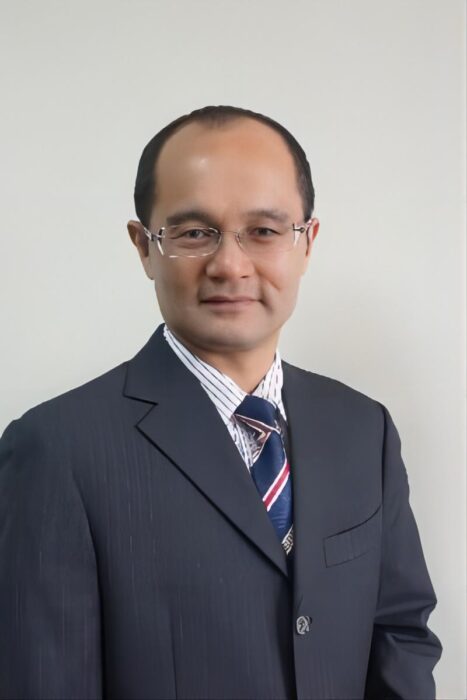
Henry Liao, LLM ’98

Welcome to Henry Liao (LLM ’98), who practices in the corporate law field in Guangzhou, China, and is a member of McGeorge School of Law’s International Board of Advisors (IBOA).

1. Henry, you are both a member of the IBOA and the Action Committee that takes on special projects. With a busy, full-time practice, why did you decide to devote some of your time to the international programs at McGeorge School of Law?

As an international student myself over 20 years ago, I had a valuable, rewarding, and gratifying experience with McGeorge School of Law. The knowledge I gained from McGeorge paved my way to practice in intricate cross-border transactions. The unconditional help I received from the affable faculty turned into lifelong friendships. As a proud and grateful member of the McGeorge international family, I have always been looking to return the favor and make my due contribution to McGeorge. From my experience, I am confident that McGeorge has strong international programs and can provide international students with lifelines for their legal careers.

With that always in mind, I have successfully referred several candidates to McGeorge international programs over the years. When I was invited to join the IBOA and the Action Committee and had an opportunity to discuss our plans and objectives with other members, I realized their goals met with mine. I have no doubt our collective efforts will broaden the exposure of our program to the international world and bring in more candidates in the future. I am honored and excited about the opportunity to share my thoughts about promoting our programs and reciprocate what I received from McGeorge.

2. Could you please describe your practice and some of the issues that you have found the most interesting over the years?

My practice includes cross-border transactions, such as IPOs (initial public offerings), M&A (mergers & acquisitions), FDI (foreign-directed investments), and project financing. I also have extensive experience in advising multinational companies, mid-sized companies, and start-ups in their IPR protections and enforcements, such as in trademark, copyright disputes, and patent litigations.

Over the years, I have found some of the issues to be most interesting. For example, the roles played by the U.S. Securities and Exchange Commission (“SEC”) and the China Securities Regulatory Commission (“CSRC”) are very different in the process of IPOs. The SEC will treat counsel as professionals and pay due respects as kind of peers while the CSRC will treat counsel as their subordinates. In addition, it is quite rare for the CSRC to issue something in writing (if any), such as non-action letters, while we usually seek the non-action letters from the SEC, and such requests are not often denied if we can lay good and solid grounds. Furthermore, the SEC limits its scope of reviews of disclosure documents. Most of the time, the SEC will conduct formal reviews only. For example, the SEC has very strict requirements regarding how the disclosure documents shall be drafted: you have to use positive sentences instead of passive sentences whenever possible. In other words, you are required to use simple and plain English. On the contrary, the CSRC would not hesitate to send its staff or summon issuers, CPAs (certified public accountants), and counsel to conduct substantive reviews of the disclosure documents in its regional offices, especially when China established its stock exchange markets.

Another interesting issue is in the area of enforcement. Enforcement of judgments used to be very challenging in China. Many years ago, we obtained a favorable judgment on behalf of Otis Elevator Company (a U.S.-listed company and one of the largest elevator manufacturers in the world) against an infringer in software infringement.

When we applied for the enforcement of the judgment, we could not locate any assets or the infringer. When we had almost given up, we got a call from the presiding judge enforcing the judgment informing us that someone else was willing to comply with the judgment on behalf of the infringer.

This gentleman is from the U.S. and is the uncle of the infringer. When he came back to his hometown from the U.S. and heard about the case, he contacted the presiding judge and learned that he could comply with the enforcement on behalf of the infringer. There were two parts of enforcement of the judgment: one was the monetary compensation. That is, the infringer was ordered to transfer the compensation to the court’s designated bank account. Upon receipt of the compensation, the court would transfer the compensation to Otis’ bank account. Another was the injunction. The infringer was ordered to stop the infringing activities. The uncle complied with the enforcement and transferred the compensation to the court. This is permitted in China and will not affect the credibility of the gentleman. On the contrary, the gentleman received a letter of praise from the court.

Through the contact with this gentleman, we learned that a judgment must be enforced in the U.S., otherwise, the person who fails to comply with a valid and final judgment could be put on the blacklist. Without a good credential, a person in the U.S. could hardly have a good living. For example, such a person could not borrow any money from a financial institution. From this case, I understand that we human beings are products of our environments: if you are living in a society governed by the rule of law, you could be a good citizen, at least, you will hold due respect for the law and order, thus, follow the rules. As counsel, we must be experts not only in the law but also in the society in which we are living.

3. What stands out for you from your LLM experience at McGeorge?

I benefit a lot from my LLM experience at McGeorge, at least from two aspects.

When I applied for the JD program at the University of Michigan Law School, my good scores at McGeorge helped me to be admitted because I could not obtain my GPA for my bachelor’s degree from Sun Yat-sen University in China (in 1999, the communications were not that convenient as nowadays). Michigan Law School allowed me to use my transcripts at McGeorge as a reference.

During the LLM program, I was fortunate enough to have my internship at a local firm in Chicago (Holleb & Coff, one of the biggest in Chicago at the time, though it does not exist anymore). I was invited to participate in an IPO project. The firm represented the issuer. From my participation, I gained first-hand knowledge about a counsel’s role in the IPO process. I was also lucky enough to be sitting for a discovery process, which is unique in the U.S. judicial system. I was asked to attend a hearing in the Cook County court and had the opportunity to share my legal practice experience in China with a judge there. To sum up, my experience accumulated in the firm made me stand out from most of my schoolmates at Michigan Law School because most of them were new graduates from college.

4. What advice do you have for students and young lawyers who want to go into an international corporate practice?

For starters, they need language skills. English is the primary language in the international business world. To go into an international corporate practice, you are expected to be able to communicate seamlessly in English in both legal and commercial settings. Most international students are at least bilingual, speaking both English and their respective primary languages. I suggest they keep working on their English proficiency after they return to their home countries.

They also need relevant legal knowledge, including corporate law, contract law, labor law, international trading, foreign exchange regulations, international taxation, intellectual property prosecution, and information privacy. Please note that the list of courses I provide is not exhaustive. Each international corporation faces distinctive legal challenges in different business sectors and different jurisdictions. If students are interested in a specific sector or a particular international corporation, they should look into the business dealings of such sector or corporation to learn their common legal challenges. If they can not only identify the legal problems but also provide a solution when pitching the client or having a job interview, they have a good chance of landing the job.

Last but not least, networking. Many job positions are filled through referrals and connections rather than public recruitment. It is the same as finding a lawyer for legal problems. Clients would prefer a referral from someone they are familiar with. To build up your network, just try whatever you can and every means available, as long as it is legal: For instance, joining a professional association, attending social events, maintaining contacts with alumni, or making connections on professional social media are all worth trying.

5. Do you have any suggestions on what the IBOA can do, in addition to this newsletter, to connect international alumni in similar areas of practice or regions?

I suggest that we invite international alumni and their firms from different states and countries to form an association. Within this association, we update each other on the latest developments in legal practices in respective jurisdictions, we share constructive management experience to improve productivity and profitability, we offer internship and job opportunities to alumni, and we enable a referral system that fulfills clients’ cross-border legal needs. As to the referral system, when clients of a member firm are looking for legal services from other jurisdictions, the referring firm makes it known to other member firms through the mechanism of the association. In the case of a cross-border project, firms from different jurisdictions may join to pitch the project whereby a small local firm may be able to compete with the BigLaws. Even if it is a purely foreign matter, a gratis referral earns the referring firm more exposure among other members and may lead to future cooperation.  Pragmatic benefits such as job opportunities and business referrals will attract more alumni and firms to join the association and in turn, bring in more referral opportunities.

If you would like to be in touch with Henry, you can reach him at [email protected].

For over a century, the Office of Legislative Counsel (OLC) has served the California state government, offering nonpartisan legal support to the Legislature, the Governor, and other state officials. This support includes a range of services designed to facilitate and streamline the legislative process.

Starting in the 1970s, the OLC began integrating computer technology at the Legislature’s request. This advancement aimed to enhance the drafting and printing of legislation and has since expanded to improve various business processes and increase public access to legislative information.

The office’s attorneys are responsible for a variety of tasks. They draft bills, constitutional amendments, resolutions, and related proposals. They also provide legal opinions on constitutional issues, statutory interpretations, and other legal matters. Additionally, they offer legal counsel to legislative members and committees, represent the Senate and Assembly in legal proceedings, and prepare service contracts for these legislative bodies. The attorneys deliver legal services to the Governor, assist with initiative measures upon request, and aid judges in drafting legislation.

McGeorge School of Law is proud of its strong presence within the OLC, with a McGeorge alumna serving as Legislative Counsel and thirty-three other alumni contributing as deputy legislative counsels.

Legislative Counsel:

  • Cara L. Jenkins, ’10, was appointed as Legislative Counsel in 2020. She oversees drafting bills, preparing bill digests, providing legal opinions, and representing the Legislature.

Courts, criminal law, and related areas:

  • Annakarina De La Torre-Fennell, ’14
  • Abby Maurer, ’12
  • Amanda Kelly, ’16
  • Roman Edwards, ’14
  • Aimee Martin, ’14
  • Sharon L. Everett, ’07
  • Stephen Myers, ’19
  • Thomas Gerhart, ’21
  • Stacy Saechao, ’12

Air resources, education, and related areas:

  • Peter Ackeret, ’06
  • Melissa Scolari, ’08
  • Robert Binning, ’15
  • Brian E. Bitzer, ’13
  • Brian Flemmer, ’14
  • Daniel J.R. Kessler, ’06
  • Gerardo Partida, ’85
  • Nathaniel W. Grader, ’12
  • Jason M. Miller, ’15

Legislative Services:

  • Suli Mastorakos, ’19

Opinions:

  • Lisa Goldkuhl, ’99
  • Joanna Varner, ’09
  • Amy Haydt, ’00
  • Laura Winterberger, ’19
  • Lisa M. Plummer, ’01
  • Rebecca M. Bitzer, ’13

Alcohol beverage control, business, civil law, employment, and related areas:

  • Sergio Carpio, ’99
  • Nikki Rossetta, ’21
  • Matt Urban, ’22
  • Jess Gosney, ’17
  • Daniela Lopez-Garcia, ’11
  • Allison M. Felkins, ’20
  • Brooke J.S. Hill, ’23

Throughout 2024, the University of the Pacific McGeorge School of Law will celebrate members of its vast alumni network in honor of the school’s 100-year anniversary. This post is part of a series highlighting 100 exceptional McGeorge School of Law alumni.

Stay tuned for more blog posts as we celebrate the law school’s centennial anniversary.

Disclaimer: If you believe you should be featured in this blog but are not, it’s possible your information wasn’t up-to-date in our records. Please update your details in the alumni directory by filling out the form: https://mcgeorge.wufoo.com/forms/z1ytl8b20dz7e78/ 

Katharine Baragona, ‘90

Katharine Baragona, ‘90, has built an impressive career as a finance executive and lawyer. She has over 35 years of global experience. She currently serves as a Senior Infrastructure Finance Specialist at the World Bank Group in Washington, D.C. In this role, Baragona leads projects in Nigeria and Sierra Leone, focusing on creating financial plans that encourage private investment in conflict-affected areas. She recently transitioned to a new team, the MNA-Energy team, where her work focuses on energy operations.

Baragona’s expertise lies in funding large-scale projects in infrastructure, power, and transport. Over the years, she has worn many hats — serving as legal counsel, lender, financial advisor, and guarantor. Her work has taken her to places like Lebanon, Jordan, Yemen, Palestine, and Iraq, where she helps create financial plans that attract much-needed investments.

Throughout her career, Baragona has worked on some of the world’s most successful infrastructure projects, working side-by-side with sponsors, lenders, and governments to develop bankable financial structures, and successfully close public-private projects.

Beyond her professional success, Baragona is deeply connected to McGeorge School of Law. She is the co-chair of the International Board of Advisors (IBOA), a group of alumni working to expand McGeorge’s global network and enhance the school’s presence and impact worldwide. Baragona has been involved with the IBOA for nearly 30 years, demonstrating her dedication to helping the school and its students thrive on the international stage.

Baragona often recommends McGeorge to students interested in international law, praising the school’s strong global network and the solid foundation it provided for her own career. Her journey from McGeorge to the World Bank exemplifies how the school prepares its students for success in the global arena, equipping them with the tools to make a real difference in the world.


Throughout 2024, the University of the Pacific McGeorge School of Law will celebrate members of its vast alumni network in honor of the school’s 100-year anniversary. This post is part of a series highlighting 100 exceptional McGeorge School of Law alumni.

Stay tuned for more blog posts as we celebrate the law school’s centennial anniversary.

The career of R. Marilyn Lee, ‘79, is a testament to her groundbreaking achievements and dedicated service across various fields. A graduate of UC Santa Barbara in 1969 with a B.A. in Political Science, Lee continued her education at the University of the Pacific McGeorge School of Law, earning her J.D. in 1977. At the law school, she contributed to the University of the Pacific Law Review as a legislative review staff member. 

R. Marilyn Lee, ’77

Lee’s professional journey began in Washington, D.C., where she worked in congressional offices before transitioning to legal practice. She spent two years as a prosecutor and three years as a civil employment lawyer and civil rights defender for the City of Los Angeles. Her legal career paved the way for her entry into the media industry. 

In 1986, Lee joined Times Mirror, the parent company of the Los Angeles Times, as Director of Human Resources. Her exceptional work led to her promotion to Vice President of Human Resources in 1992, and she later became Vice President of Public Affairs in 1996. Lee’s role involved overseeing operations in over 20 states and managing various media outlets, including newspapers, television stations, and book companies. She also co-founded the Minority Editorial Training Program (METPRO) to enhance newsroom diversity, a program that continues to benefit the industry. 

Lee was the first woman to become a Vice President of the Los Angeles Times, where she managed a department of 220 employees and ensured the Times’ continued operation during significant events like the 1992 riots following the Rodney King trial and the 1994 Northridge earthquake. 

In addition to her professional achievements, Lee has been deeply involved in her alma mater and various non-profits. She served on the UCSB Alumni Association Board of Directors from 1982 to 1989, and was the first woman from UCSB elected to the UC Board of Regents, serving from 1986 to 1988. She has also been involved with numerous non-profits, including the UC Press Foundation, California State Summer School for the Arts, Los Angeles Times Fund, Leukemia & Lymphoma Society, and Las Angelitas del Pueblo (Olvera Street). 

Marilyn Lee’s career is marked by her trailblazing roles, commitment to diversity, and extensive contributions to both her professional field and community service. 


Throughout 2024, the University of the Pacific McGeorge School of Law will celebrate members of its vast alumni network in honor of the school’s 100-year anniversary. This post is part of a series highlighting 100 exceptional McGeorge School of Law alumni.

Stay tuned for more blog posts as we celebrate the law school’s centennial anniversary.

A man poses outside in front of a park.
Jessie Morris Jr., ’78, has dedicated over 40 years as a public defender.

Jessie Morris, Jr., a McGeorge School of Law graduate of the Class of 1978, has served as a public defender for over 40 years, with a focus in criminal defense. Since 2008, Morris has served as an Assistant Public Defender in Sacramento County, and his career includes roles as the Chief Deputy Public Defender in Yolo County and a long history of criminal defense practice. In 2021, Morris was honored with the Sacramento County Bar Association’s Attorney of the Year award — an achievement marking the first time the award has been bestowed upon a public defender.

Morris is celebrated for his innovative work in social justice, particularly his efforts to empower attorneys of color and combat biases within the legal profession. Among his most significant contributions is his work with those experiencing homelessness, providing expungement services at locations such as Loaves and Fishes. His dedication has helped individuals remove criminal records that often create barriers to employment, housing, and education — issues that disproportionately impact communities of color.

The idea for an expungement clinic began with Morris’ criminal law class at American River College, where he taught students how to interpret arrest records and complete expungement paperwork. This initiative grew into a model program, with monthly clinics providing critical services to hundreds of individuals stigmatized by criminal convictions. The program’s success was further amplified by partnerships with local bar associations and the expansion of outreach efforts funded by state grants.

Morris’ advocacy has significantly contributed to the removal of barriers to economic opportunity for many in Sacramento, earning him high praise from colleagues and leaders in the legal community. His lifelong commitment to justice and equality continues to inspire those around him, making him a truly deserving recipient of this prestigious award.


Throughout 2024, the University of the Pacific McGeorge School of Law will celebrate members of its vast alumni network in honor of the school’s 100-year anniversary. This post is part of a series highlighting 100 exceptional McGeorge School of Law alumni.

Stay tuned for more blog posts as we celebrate the law school’s centennial anniversary.

McGeorge School of Law has more than 400 alumni serving as judges and justices across the United States, some of whom are appellate judges. Appellate judges review decisions made by lower courts to ensure the correct application of the law and proper legal procedures. They evaluate records from prior proceedings, hear arguments from attorneys, and issue written opinions that can uphold, reverse, or modify case outcomes. Their rulings set important legal precedents, maintaining the integrity and consistency of the judicial system. The following Alumni of Honor all serve on the bench as appellate judges and justices:

A woman poses for a photo.

The Hon. Consuelo M. Callahan, ’75

Judge Consuelo M. Callahan, a 1975 graduate of McGeorge School of Law, serves on the U.S. Court of Appeals for the Ninth Circuit. She began her career as Deputy City Attorney for Stockton and Deputy District Attorney for San Joaquin County. In 1996, she was appointed to the California Court of Appeal before her federal appointment in 2003.

Judge Morrison C. England, Jr., '83

The Hon. Morrison C. England Jr., ’77 and ’83

Judge Morrison C. England Jr. serves on the U.S. District Court for the Eastern District of California, appointed in 2002. He earned both his undergraduate and J D degrees from the University of the Pacific and served in the U.S. Army Reserve. His career includes private practice, partnership in a law firm, and judicial roles on the Municipal and Superior Courts in Sacramento.

Justice Andrea L. Hoch, ’84

Justice Andrea Hoch was appointed to the California Court of Appeal, Third Appellate District in 2011 by Gov. Arnold Schwarzenegger. She graduated from Stanford University and McGeorge School of Law, later working on labor law issues and high-profile cases as a Deputy Attorney General. Hoch has held significant roles, including Chief Assistant Attorney General for the Civil Law Division.

The Hon. Herbert I. Levy, ‘77

Justice Herbert Levy, a 1977 graduate of McGeorge School of Law, serves on the California Court of Appeal, Fifth Appellate District. His career includes private practice in Fresno, judicial appointments to the Municipal and Superior Courts, and his current appellate role since 1997.

The Hon. Johnnie B. Rawlinson, ’79

Judge Johnnie Rawlinson, a 1979 McGeorge School of Law graduate, is a U.S. Circuit Judge for the Ninth Circuit. She began her legal career in private practice and became one of the first African American women admitted to practice law in Nevada. Rawlinson served as a U.S. District Judge for Nevada before her current appellate role.

The Hon. Jonathan K. Renner, ‘96

Justice Jonathan Renner, a McGeorge School of Law graduate, serves on the California Court of Appeal, Third Appellate District. His legal career includes roles as Deputy Attorney General, Senior Assistant Attorney General, and Legal Affairs Secretary to Governor Jerry Brown. Renner’s work has focused on significant government litigation and advising top state officials.

Justice Ronald Robie

Justice Ronald Robie, ‘67

Justice Ronald Robie received his JD from McGeorge School of Law in 1967 and has served on the California Court of Appeal, Third Appellate District since 2002. His extensive judicial career includes roles as a Municipal Court Judge, Superior Court Judge, and Associate Justice Pro Tem for both the Court of Appeal and California Supreme Court. He also held significant positions in water resources and legislative affairs before his judicial appointments.

A man poses for a photo.

The Hon. Dana Makoto Sabraw, ’85

Judge Dana Sabraw, appointed by President George W. Bush in 2003, serves as Chief Judge for the U.S. District Court for the Southern District of California. A McGeorge School of Law graduate, he practiced privately and served as a judge on the San Diego County Superior Court. Sabraw has held judicial positions since 1995, including Municipal Court Judge.

Justice Arthur Scotland, ‘74

Justice Arthur Scotland, a native of Sacramento, graduated with honors from McGeorge School of Law in 1974. He served as a Deputy District Attorney, Deputy Attorney General, and Cabinet Secretary to the Governor before being appointed a Superior Court Judge in 1987. In 1998, he was appointed as Presiding Justice of the California Court of Appeal, Third Appellate District. He retired from the bench in 2010.


Throughout 2024, the University of the Pacific McGeorge School of Law will celebrate members of its vast alumni network in honor of the school’s 100-year anniversary. This post is part of a series highlighting 100 exceptional McGeorge School of Law alumni.   

Stay tuned for more blog posts as we celebrate the law school’s centennial anniversary. 

A man poses for a photo.
Serge Tomassian, ‘ 83, is a prominent figure in Orange County for his community involvement.

Serge Tomassian, ’83, a founding partner of Tomassian, Throckmorton & Inouye LLP, is a prominent member of the Orange County Bar Association (OCBA). His leadership roles include serving on the OCBA Board of Directors and chairing multiple OCBA committees. Tomassian also chairs the World Affairs Council of Orange County (WAC), where he has been a member for over 30 years.

Under Tomassian’s leadership, WAC has grown significantly, hosting notable speakers such as a prince from Saudi Arabia, former Central Intelligence Agency (CIA) heads, leading congressmen, and ambassadors. Despite the diversity and strong opinions of the speakers and participants, the events remain collegial, a testament to Tomassian’s ability to set a positive, respectful tone. He encourages members to engage in civil discourse, share ideas respectfully, and avoid imposing viewpoints on others.

Tomassian’s passion for cultural respect and unity stems from his multicultural upbringing. Born in Marseille, France, but raised in California, Tomassian’s fascination with diverse cultures was nurtured through family voyages and discussions on foreign affairs. His office is a testament to his global perspective, adorned with souvenirs from around the world.

Tomassian’s legal career began at O’Melveny & Myers before he co-founded his current firm specializing in construction, real estate, and business litigation. Recognized as one of Orange County’s top litigators, Tomassian’s contributions to law and community are profound. He serves as an adjunct professor, writes extensively on legal issues, and has been featured in numerous media outlets.

Tomassian’s dedication to community involvement and world affairs is demonstrated by his service on the Executive Board and as Chairman for the World Affairs Council of Orange County, where he represented the Council on leadership mission trips and hosted various dignitaries. His contributions earned him the Golden Orange Award for leadership and the distinction of “Ambassador at Large” in 2017.

Tomassian stands as a beacon of integrity and leadership, embodying the values of McGeorge School of Law and inspiring others to pursue unity and justice.


Throughout 2024, the University of the Pacific McGeorge School of Law will celebrate members of its vast alumni network in honor of the school’s 100-year anniversary. This post is part of a series highlighting 100 exceptional McGeorge School of Law alumni.   

Stay tuned for more blog posts as we celebrate the law school’s centennial anniversary. 

McGeorge School of Law had humble beginnings in 1924 as a single-room night school in downtown Sacramento, then known as Sacramento College of Law. From those modest origins, the school has evolved under the guidance of 10 visionary deans, each contributing to its journey from a small local institution to a prominent law school.

McGeorge School of Law campus
Photo: McGeorge School of Law campus in Sacramento, CA.

Verne Adrian McGeorge, Founder, 1924–1930 

Verne Adrian McGeorge was the founding dean and professor of law. In 1929, the Board of Trustees renamed the school McGeorge College of Law in honor of its founder. The first commencement occurred just a year later in 1925, and the first woman graduated shortly after in 1927.

The contributions of the following successive deans, though less documented, were crucial in sustaining and advancing McGeorge School of Law’s esteemed legacy and setting the stage for future achievements:

  • Russell Harris (1930–1933)
  • Gilford Rowland (1933–1937)
  • Lawrence Dowrety (1937 – WWII closure)
  • John Swann (1946–1957)

Gordon D. Schaber, 1957–1991

In 1957, Gordon D. Schaber became dean. He held this role for 34 years. Under his leadership, McGeorge transformed from a local institution into a nationally recognized law school and became affiliated with the University of the Pacific in 1966. That same year, McGeorge moved to its permanent Oak Park location, now part of the vibrant 13-acre Sacramento campus.

Dean Schaber’s tenure was marked by key milestones: McGeorge gained full accreditation from the State Bar of California in 1964, affiliated with the University of the Pacific in 1966, and secured ABA accreditation in 1968. The school’s growth continued with AALS accreditation and Order of the Coif status. Schaber’s legacy also includes the establishment of McGeorge’s Community Legal Services, and externship programs, which have had a lasting impact on the Sacramento community.

Gerald Caplan, 1991–2002 

Gerald Caplan was instrumental in establishing the Capital Center for Law and Policy. Located just 3.1 miles from the California Capitol Building, this Center has gained significant prominence under his leadership.

Elizabeth Rindskopf Parker, 2002–2012 

During Elizabeth Rindskopf Parker’s tenure as dean, the Global Center for Business & Development was established, fostering engagement with the global legal community through significant international law research and active participation in transnational policymaking and education.

Francis J. “Jay” Mootz, 2012–2017 

Under Francis J. Mootz III’s leadership, McGeorge School of Law introduced several innovative programs: the Master of Public Administration and the Master of Public Policy, and the Master of Science in Law. After his tenure as dean concluded, Mootz has continued to play a vital role at McGeorge as a professor, teaching Contracts, Sales, Insurance Law, Employment Law, and Critical Race Theory.

Michael Hunter Schwartz, 2017 – present

Dean Michael Hunter Schwartz, formerly dean of the William H. Bowen School of Law at the University of Arkansas at Little Rock, assumed the role of McGeorge’s 10th dean in 2017. During his tenure, McGeorge School of Law received a significant gift in 2021, among the largest in U.S. legal education history. Dean Schwartz also served as interim provost for the University of the Pacific for one year amidst an interim presidency and the onset of the global pandemic.

McGeorge School of Law has since risen to new heights under Dean Michael Hunter Schwartz, who ranked as the 9th most influential person in legal education twice. A recognized national leader in legal education, Dean Schwartz achieved notable milestones at McGeorge, including the highest bar passage rate in 25 years, the establishment of the Honors Accelerated JD degree and various master’s programs, and enhancements to legal clinics and experiential learning. He also pioneered an alumni-student mentoring program, launched the Center for Inclusion and Diversity and the Military and Veteran Student Center at the Sacramento Campus, and bolstered recruitment efforts, culminating in a transformative gift benefiting future McGeorge students.

McGeorge School of Law’s transformation from a modest single-room night school in 1924 to a distinguished institution of legal education is a testament to the enduring vision and leadership of its ten deans. Each dean has played a pivotal role in shaping the school’s growth and reputation, guiding it from its humble beginnings to becoming a prominent and influential law school. As we look towards the future of McGeorge, we remain committed to expanding our programming and resources to better serve our students. This forward-looking approach ensures that McGeorge will continue to thrive, fostering the next generation of legal professionals and upholding its legacy of excellence.


Throughout 2024, the University of the Pacific McGeorge School of Law will celebrate members of its vast community member network in honor of the school’s 100-year anniversary. This post is part of a series highlighting 100 exceptional McGeorge School of Law community members.   

Stay tuned for more blog posts as we celebrate the law school’s centennial anniversary. 

Iván Morales, ’96 and ’97, earned two law degrees from McGeorge School of Law.

Iván Morales, a distinguished alumnus of McGeorge School of Law (’96 and ’97), exemplifies how a legal education can unlock numerous opportunities. Hailing from San Juan, Puerto Rico, Morales has leveraged his McGeorge training to advance to prominent legal roles in New York and beyond. He is currently serving as general counsel at Signaplex.

After earning a JD degree in 1996 and an LLM degree in Transnational Business Practice in 1997, Morales began his career with Gomez, Acebo & Pombo in Madrid, Spain, where he honed his skills in bank finance and corporate finance. His career later led him to Shearman & Sterling in New York, where he gained more experience in M&A, bankruptcy, and litigation.

In 2003, Morales joined Linklaters in New York as a senior litigation and restructuring associate, further building his reputation in the legal field. His career experienced a pivotal shift in 2008 when he joined Visa International as the Head of Legal Services and Government Relations for Latin America, where he handled complex legal matters and built important government relationships.

Morales’ passion for innovation and leadership saw him take on the role of general counsel at the Somos Group, a Latin American Entertainment Group based in Miami, Florida. His time there was marked by significant contributions to the company’s legal and business strategies.

In 2013, Morales founded iCorporate Consulting, LLC (iCorp), showcasing his entrepreneurial spirit and commitment to helping clients succeed in U.S. transactions. As the managing director of iCorp, Morales uses his extensive experience to offer top-notch consulting services, guiding businesses through the difficulty of international transactions.

Despite his busy career, Morales stays connected to his alma mater. He serves on McGeorge School of Law’s International Board of Advisors, where he enjoys connecting with fellow international alumni and helping improve the university and law school.

Morales’ journey highlights the vast opportunities a legal education can offer. His career, defined by remarkable achievements and unwavering commitment, serves as an inspiring example for both current and future students at McGeorge School of Law.


Throughout 2024, the University of the Pacific McGeorge School of Law will celebrate members of its vast alumni network in honor of the school’s 100-year anniversary. This post is part of a series highlighting 100 exceptional McGeorge School of Law alumni.   

Stay tuned for more blog posts as we celebrate the law school’s centennial anniversary.