
Kalisa’s experience at Pacific McGeorge — and beyond
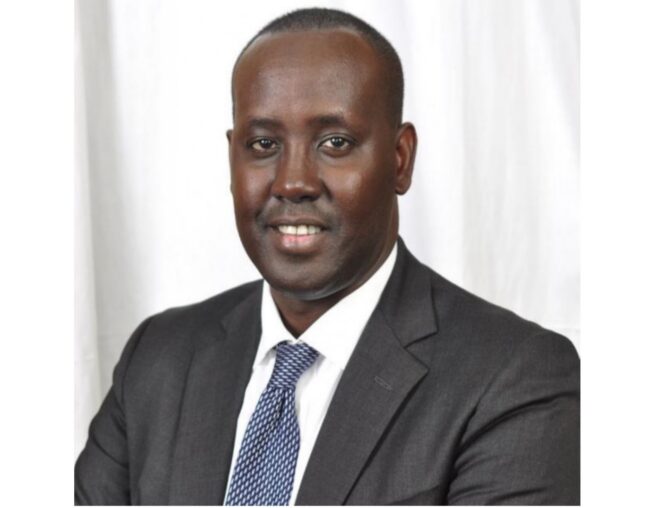
1. Looking back at your LLM experience at McGeorge (2008–2009), what has stayed with you most?
McGeorge School of Law gave me a way of seeing law that has shaped everything I’ve done since: law as a system that builds institutions, not just a set of courtroom rules. I began to connect legal design to everyday outcomes and how procedures affect efficiency, fairness, and public trust.
What also stayed with me were relationships that turned into a lasting professional community.
Reconnecting with Professor Emerita Linda Carter later during my U.N. International Criminal Tribunal for Rwanda (IUNCTR), and engaging with Professor Omar Dajani, and attorneys John Pezone and Howard Mosely. I also forged friendships with students from whom I learned how business law can work with human rights and diplomacy (Sebastian Neilson, Professor Dominic Dagbanja, and Dr. Fahad Almutairi). This reminded me that mentorship and intellectual friendship can travel with you across continents and career stages.
McGeorge also strengthened the practical skills I rely on in reform environments: comparative analysis, stakeholder translation, impact-minded thinking, and the discipline to turn ideas into implementable reforms.
Those tools became especially important in roles where I had to bridge domestic legal systems with international standards.
2. During your years with the UNICTR, you helped establish the first-ever transfer of jurisdiction from the UNICTR to Rwandan courts. Why did that matter?
For Rwanda, the transfer was about more than a legal milestone, it was about credibility, sovereignty, and rebuilding public trust after the 1994 genocide of the Tutsi. It brought justice closer to survivors and communities and helped move “complementarity” from theory to practice.
The work was very complex. It required alignment across institutions and legal traditions. In my earlier role as Director of Judicial Cooperation, I had already learned how much diplomacy and technical precision it takes to work across different legal cultures; prosecution, defense, investigators, and Trial Chambers motions operating with distinct expectations.
It also required reforms and safeguards described in the narrative, including strengthening fair-trial guarantees, developing witness-protection and cooperation systems, and navigating skepticism about domestic capacity alongside national concerns about external scrutiny.
The deepest lesson for me is simple: progress in international criminal justice depends as much on resilience and trust as it does on legal frameworks.
3. How do you see the future of international criminal justice?
The ICTR shaped international criminal law in long-lasting ways, including jurisprudence on genocide, crimes against humanity, and accountability for incitement, while also modeling how international justice can connect to national jurisdictions through cooperation and transfers back of cases in post conflict countries for better accountability. That legacy still matters because today’s challenges require both accountability and institution-building.
Looking ahead, I believe the field should deepen complementarity by investing in national systems and professional capacity not as an afterthought, but as a central strategy. International tribunals remain important for its work on calling humanity about atrocities that happening, but long-term legitimacy depends on strengthening domestic institutions that can deliver fair, timely justice with durable safeguards.
4. At ABA-ROLI, you focused on training justice actors with very different backgrounds. How do you design training that works across an entire justice chain?
In fragile contexts, you can’t train police, prosecutors, judges, corrections, and community mediators as if they work in separate worlds because they don’t. If one part of the chain fails, rights fall through the cracks, and the public feels it immediately. It is about uplifting the criminal process while respecting the complementary role of each public institution under national justice policy vision.
In Rwanda, this kind of systems approach supported large-scale outcomes including leading a 45-prosecutor team that resolved about 35,000 backlogged criminal cases while maintaining attention to rights protections and resolving more than 28,000 plea bargaining cases country wide with a decrease of 25% of carceral population. For me, that balance of efficiency with fairness is the real test of reform.
5. When legal mechanisms fall short or politics limits ideals, how do you keep your commitment to the rule of law?
No country or Leader wants to be listed as not respecting human rights. I have worked in places where the international community is looking to address the rule of law deficiency or where institutions can fail the very people they are meant to protect for one or another reason.
When domestic mechanisms fall short, my approach centers on connecting the nation’s unique cultural context with the standards established by development partners. I usually draw from some proven concept in Rwanda and customizing it to meet the specific needs of the country beneficiary. In situations where political challenges arise, I prioritize diplomacy and weight on the developing partner political weight and national authorities or politicians’ strength. These skills are essential in navigating obstacles. Given the current deficiencies in the rule of law, my strategy emphasizes collaborating to design and follow a clear road map toward meaningful progress.
6. How do you balance private practice, program leadership, and civil society?
I don’t see them as separate careers. I see them as doing the same work from three different perspective: making justice real, accessible, and ordinary people.
Private practice keeps reform grounded in what happens in real cases; arrests at night, evidentiary gaps, and the pressures faced by defendants who cannot afford counsel. The program leadership is where good ideas get scaled, measured, and institutionalized, and civil society work, through Action pour le Développement due Peuple (ADEPE), keeps accountability rooted in communities.
Balancing these roles takes focus and strong teams, and it often means saying no when something does not align with mission or ethics. But it gets worth it when a policy, training, or procedure you helped build starts improving daily outcomes in courts and communities.
7. For current McGeorge students who want to work in international criminal law or post-conflict reconstruction, what should they seek out and what mindset matters most?
For students aspiring to work in international criminal law or post-conflict reform, it is essential to seek out experiences that not only develop strong legal skills like at McGeorge School of Law, but also cultivate genuine humility and compassion.
In post-conflict environments, success is not exclusively achieved through argumentation and powerful legal memorandum. Building trust is fundamental, and that begins with active listening. Students should prioritize clinics and internships that place them in close proximity to real cases and institutions such as courts, prosecutors’ offices, ministries of justice, human rights organizations, or respected NGOs. These opportunities are invaluable for learning how evidence is managed, understanding the progression of cases, and seeing firsthand how legal systems operate in a given political situation.
Investing in language learning and developing cross-cultural fluency is also crucial. Reform work is inherently relational, and effective communication across different systems is just as important as legal expertise. In terms of mindset, students should focus on four core principles: fostering meaningful connections, maintaining humility to learn from affected communities, exercising discipline with high standard evidence and processes, and committing to long-term engagement since building institutions requires sustained effort. Education at McGeorge has shaped advocates who are equipped for criminal justice reform and human rights work, demonstrating through their careers that lasting change is built on integrity, patience, and partnership.
Bio
Michael Kalisa is a Rwandan lawyer and criminal justice reform practitioner who has spent more than two decades working at the intersection of transitional justice, institutional reform, and access to justice.
His work has taken him across some of Africa’s most demanding post-conflict contexts, including Rwanda, the Central African Republic, the Democratic Republic of Congo, and South Sudan.
Kalisa earned his LLM degree in Government and Public Policy from the University of the Pacific McGeorge School of Law in 2009. He has worked as public servant and international public servant. His career started with Rwanda’s National Public Prosecution Authority (NPPA), the UN International Criminal Tribunal for Rwanda (UNICTR), the Institute of Legal Practice and Development (ILPD), the ABA Rule of Law Initiative (ABA-ROLI) in the Central African Republic, and Yale University’s Jackson School of Global Affairs.
From 2022 to 2025, Kalisa served as Country Director and Team Leader for Pepperdine University’s Sudreau Global Justice Institute in Rwanda, supporting the nationwide transition to plea bargaining and related reforms.
Today, Kalisa serves as Head of Legal and Compliance at Action pour le Développement du Peuple (ADEPE), a Rwandan NGO I co-founded, and I continue private practice in a boutique law firm setting as Founder and Advocate at Kalisa Law & Compliance in Kigali.